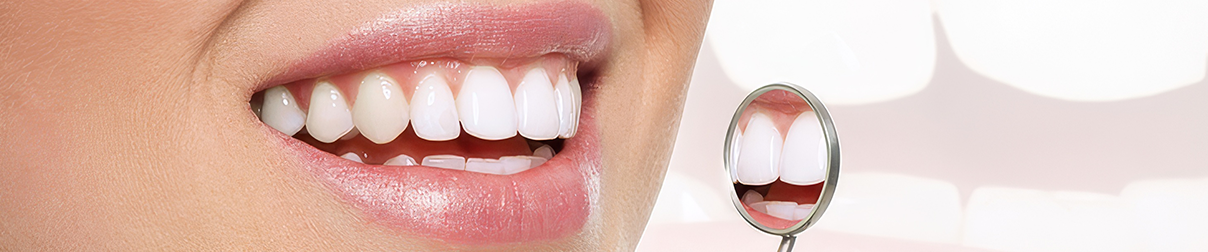
In aesthetic dental treatments, one of the most commonly compared options is E-max, while the other is zirconia teeth. Both are materials widely used in modern dentistry and offer advantages in terms of natural appearance and functionality. However, patients often ask this question: “Is E-max better, or zirconia?”
In a modern dental clinic, after examining the patient’s teeth, the dentist determines which material is more suitable. This is because both E-max and zirconia teeth can provide aesthetic, healthy, and long-lasting results with proper planning. The ADA also emphasizes that indirect restorative materials differ in composition, mechanical properties, and clinical indications; therefore, material selection should be based on the specific case.
What is E-max?
E-max is a lithium disilicate-based ceramic material. Its main advantage is its translucency and light-transmitting property, which is close to natural tooth enamel. For this reason, E-max is especially chosen for the front teeth, meaning the area that is more visible when smiling, in order to achieve an aesthetic result.
E-max teeth can imitate the natural tooth color, shine, and translucency very well. That is why E-max is often a suitable choice for patients who say, “I don’t want my teeth to look artificial,” “I want a natural smile,” or “I want my front teeth to look aesthetic.”
E-max is most often used in the following cases:
- Aesthetic restoration of front teeth
- Veneer and crown treatments
- Changes in color, shape, and size
- When a more natural and translucent appearance is desired
- In areas where the chewing load is not very high
Although E-max is a very strong material aesthetically, it is not the ideal choice for every patient. If the patient has teeth clenching, nighttime teeth grinding, a very strong chewing habit, or high pressure on the back teeth, the dentist may consider zirconia a more suitable material.
What is zirconia?
Zirconia teeth are made from zirconium oxide-based material. This material stands out for its strength, durability, and resistance to chewing pressure. Zirconia can be used on both front and back teeth, but it is especially preferred for back teeth and in patients with high chewing force.
The main advantage of zirconia is that it is strong and durable. For this reason, it can be used in large tooth gaps, dental bridges, implant-supported crowns, and areas where the chewing function is greater. Scientific sources also note that lithium disilicate and zirconia are among the most widely used materials in metal-free restorations, while zirconia stands out in terms of mechanical strength.
Zirconia is most often used in the following cases:
- Restoration of back teeth
- Areas with high chewing load
- Implant-supported teeth
- Dental bridges
- When the tooth color is very dark and coverage is needed
- Cases where a more durable material is required
Previously, zirconia teeth might not have looked as natural as E-max from an aesthetic point of view. However, modern zirconia materials can now provide a more translucent, natural, and aesthetic appearance. Therefore, today zirconia is used not only for strength but also for aesthetic results.
Main differences between E-max and zirconia
The difference between E-max and zirconia is not only about price. The main difference between these two materials is related to appearance, strength, area of use, and functional advantages.
E-max is more aesthetics-oriented. Since it has translucency close to a natural tooth, it can provide a very good result on front teeth. It is chosen for a natural appearance in smile design, veneers, and single-tooth restorations.
Zirconia, on the other hand, is more strength- and function-oriented. Since it is more resistant to chewing force, it is preferred for back teeth, implant-supported crowns, and dental bridges.
Simply put:
- If you want a more natural and translucent front tooth appearance, E-max may be suitable.
- If a stronger material that is resistant to chewing load is needed, zirconia may be more suitable.
- If the tooth color is very dark, zirconia can provide better coverage.
- If maximum aesthetics are desired in the front area, E-max may be chosen more often.
- For back teeth and implant-supported restorations, zirconia may be a more functional choice.
Which looks more natural: E-max or zirconia?
In terms of natural appearance, E-max is a more translucent and light-transmitting material. Therefore, it can better create the effect of natural enamel on front teeth. Especially if the patient’s tooth color is light and there is no serious discoloration under the tooth, E-max can create a very aesthetic result.
Zirconia, however, is a more opaque material. This feature is an advantage in some cases. For example, if the tooth color is very dark, if the tooth has darkened after root canal treatment, or if there is a metal post, zirconia can hide that dark color better.
So, the answer to the question “which looks more natural?” depends on the condition of the tooth. E-max may look more natural on healthy-colored front teeth, while zirconia may provide a more aesthetic result on darker teeth.
Which is stronger?
In terms of strength, zirconia is considered stronger than E-max. Zirconia is more resistant to chewing pressure and the risk of cracking or breaking. Therefore, on back teeth, in large restorations, and in patients with a habit of clenching their teeth, the dentist may consider zirconia more suitable.
E-max is also a sufficiently durable material, but it stands out more for its aesthetic advantage. Its longevity depends on proper indication, proper bonding, the patient’s oral hygiene, and regular dental check-ups.
Why do the prices differ?
E-max and zirconia prices may vary from clinic to clinic. The price is not determined only by the name of the material. Several main factors play a role here:
- Number of teeth
- Quality of the material used
- Laboratory work
- Dentist’s experience
- Previous condition of the tooth
- Whether additional treatment is needed.
- Whether it is a veneer, crown, implant-supported crown, or bridge
- Aesthetic planning and smile design
Sometimes a patient only asks, “How much does one tooth cost?” However, it is not correct to give an exact price without a dental examination. This is because in some cases, gum treatment, root canal treatment, removal of old crowns, or additional preparation stages may be needed.
In general, E-max may be priced higher in certain cases because of its aesthetic laboratory work and natural appearance advantage. Zirconia, however, may have different prices depending on its area of use, material type, and the complexity of the structure.
How should the choice between E-max and zirconia be made?
The choice between E-max and zirconia should be based not only on the patient’s preference, but also on the dentist’s clinical evaluation. This is because a patient may aesthetically want E-max, but the condition of the tooth may be more suitable for zirconia. Or a patient may want zirconia, but for a more natural result on the front teeth, E-max may be a better choice.
For the right choice, the dentist evaluates the following:
- The location of the teeth
- The color and shape of the teeth
- Gum health
- Chewing force
- Teeth clenching and grinding habits
- Previous treatments on the tooth
- The patient’s aesthetic expectations
- Smile line and facial structure
For this reason, in the comparison of E-max and zirconia, the main goal is not to answer the question “which is better?” but to answer the question: “which is more suitable for my teeth?”
Conclusion
E-max and zirconia teeth are among the most commonly used materials in aesthetic dentistry. E-max stands out for its natural translucency and aesthetic appearance, while zirconia stands out for its strength and functional durability. Which one is better depends on the patient’s tooth structure, gum health, chewing habits, and aesthetic expectations.
At Dentera dental clinic, the condition of your teeth is evaluated individually, and the most suitable treatment plan is presented to you. Whether it is E-max, zirconia, or other aesthetic dental treatments, our goal is to help you achieve a healthy, functional, and natural-looking smile.
At Dentera, you can start aesthetic dental treatments with interest-free credit, no guarantor, and no initial payment. Take the first step toward a healthy and aesthetic smile today — feel the change with Dentera!
FAQ
Is E-max better or zirconia?
This depends on the condition of the tooth and the patient’s needs. E-max is mostly chosen for a more natural and aesthetic appearance.
Which is more suitable for front teeth: E-max or zirconia?
If the main goal is maximum natural appearance and the tooth color is not very dark, E-max may be suitable for front teeth.
Which material is better for back teeth?
Since the chewing load is higher on the back teeth, zirconia is often considered a more suitable choice. However, the final decision should be made after a dental examination.
Why do E-max and zirconia teeth prices differ?
The price varies depending on the type of material, number of teeth, laboratory work, the dentist’s planning, the need for additional treatment.
How long do E-max and zirconia teeth last?
When prepared correctly, cared for properly, and checked regularly by a dentist, both materials can be used for a long time.